Set Your Own Korean Imperial Banquet Table at Deoksugung
See tableware with the imperial plum blossom emblem, then choose ingredients such as pheasant or truffles for a projected dish. At Dondeokjeon Hall, the artifacts give the new experience its context.
At Dondeokjeon Hall in Deoksugung Palace, choose a model ingredient and place it on the table. A dish appears on the plate. The exhibit uses AI to generate a name, image and story from your choices, then projects the result onto the table. Setting a Korean Imperial Banquet with AI opened Nov. 3. Before choosing ingredients, look at the original tableware and ask why the Korean Empire set a Western-style table for diplomatic guests.
A 2017 reconstruction of an imperial banquet at Seokjojeon Hall.
Dondeokjeon Hall at its reopening in 2023.
Start with the imperial tableware
The Korea Heritage Service exhibition guide describes about 60 objects and displays, including a chandelier, iron cooking implements and Western-style tableware bearing the plum blossom emblem. The imperial household placed its own mark on a Western table setting. Look for the object that tells you who is hosting before you try to identify every piece of cutlery.
The exhibition video at Dondeokjeon Hall.
Then look at what guests could see and what the kitchen had to prepare. The dinner service sat in front of the guests. Iron implements were part of the work before a dish reached the table. Think of the people tending the heat and carrying food out, and a banquet begins to look like a carefully organized event.
A plum blossom on a plate and the same emblem on a chandelier do different jobs. Which would you notice as you entered the room? Which would you keep seeing during the meal?
The digital kitchen experience at Dondeokjeon Hall.
When you spot the emblem, think about who was meant to see it. A piece used inside the palace and one placed in front of diplomatic guests may look alike. Putting the tableware next to cooking implements makes it easier to see what was presented and what went on behind the table.
When pheasant and truffles share the table
You choose from model ingredients. Yonhap’s exhibition report describes 30 options, including pheasant, lamb, salmon, truffles and caviar. A sensor reads the models, the digital kitchen shows preparation, and the finished creation appears on the central table. The process takes about five minutes. If you’re going with others, compare one familiar pairing with a combination you would rarely eat.
Seokjojeon Hall at Deoksugung Palace.
The dish changes with what you choose. To learn what was actually served, look at the research and artifacts in the exhibition. With children, try picking one object from the period and one dish you made today. You’ll have two things to talk about after the projection ends.
Compare two other tables at Deoksugung
The Korea Heritage Service studied and exhibited imperial dining before this project. A 2017 reconstruction of a Western-style banquet at Seokjojeon Hall shows where the glasses and plates sat. At the Dondeokjeon table you can change a dish yourself. Each display makes a different part of the same history easier to see.
An autumn view of Deoksugung Palace.
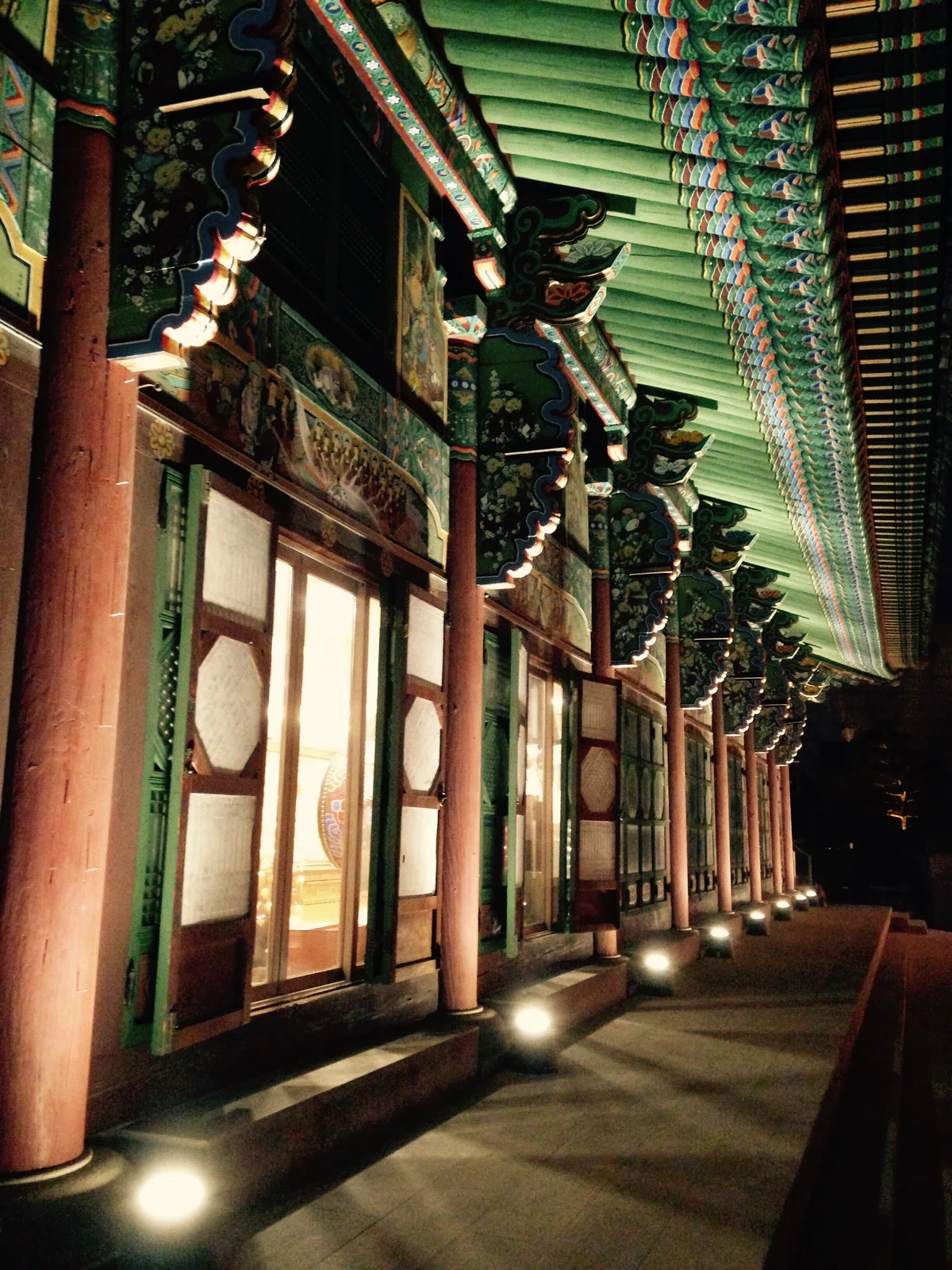
As you walk the palace grounds, take a separate look at the traditional halls and the Western-style buildings. In front of Junghwajeon Hall, you can consider where court ceremonies took place. Dondeokjeon gives you a place to think about diplomatic receptions. Check separate admission arrangements if you want to go inside Seokjojeon.
A view of Deoksugung from above.
A 2019 special exhibition at Seokjojeon described a different table. Using a menu held by the New York Public Library, it presented the Korean lunch Emperor Gojong served Alice Roosevelt and her party in 1905. Put that lunch next to the Western table shown in 2017 and you can see that the court had more than one way of welcoming guests.
A reconstruction of a Western-style banquet at Seokjojeon in 2017.
Read the display in the building where it belongs
If you plan to see several palace buildings, decide where the exhibition fits. See it first to recognize a few implements and pieces of tableware before looking at the reception building. Or walk the traditional halls first to compare court ceremony with a Western-style dining room in one visit. Plan around the final admission time so you can reach the display.
You can remember a pattern on a piece of china, the moment the kitchen responds to an ingredient and the view of Dondeokjeon from outside. Those three details connect the objects, the experience and the building. Hosting a guest took food, tableware and a space arranged to receive them.
The official poster for the Dondeokjeon exhibition.
A reconstruction photo shows how researchers interpreted documents and objects. Choosing ingredients at the new table gives visitors a way to say what surprises them. Guess what might happen if you swap one model for another, then see what the projection makes.
The Korea Heritage Service’s 2023 opening video explains Dondeokjeon’s history as a place to receive diplomats and hold banquets.
Dondeokjeon’s upper terrace at the 2023 reopening.
Dondeokjeon Hall at Deoksugung Palace on Naver Map
- Venue: First floor, Dondeokjeon Hall, Deoksugung Palace, 99 Sejong-daero, Jung-gu, Seoul.
- Dates: Nov. 3–Mar. 28, excluding palace closure days.
- Hours: 09:00–17:30. Last admission at 17:00.
- Admission: The exhibition is free. Palace admission is separate. The royal palace free-entry period runs through Nov. 15, excluding regular closure days.
Start with one object bearing the plum blossom emblem. Looking at that small mark before seeing the menu you created gives you a way to remember both the original table and the digital one.
Sources
- Photography
- 문화체육관광부 국민소통실 · 국가유산청 · 양지영 / 내 손안에 서울 · 임중빈 / 내 손안에 서울 · 조선호텔 / 연합뉴스
Related stories
Latest stories
The editor
Daily Korea Editorial
Korea through fashion, places, food and everyday culture.
More from this editor
Recommended stories