How Do You Move a Do Ho Suh House to Another City?
Two films at MMCA Seoul show what it takes to move a hanok and how the artist remakes a home from fabric.
 국립현대미술관 · 고티에 드블롱드
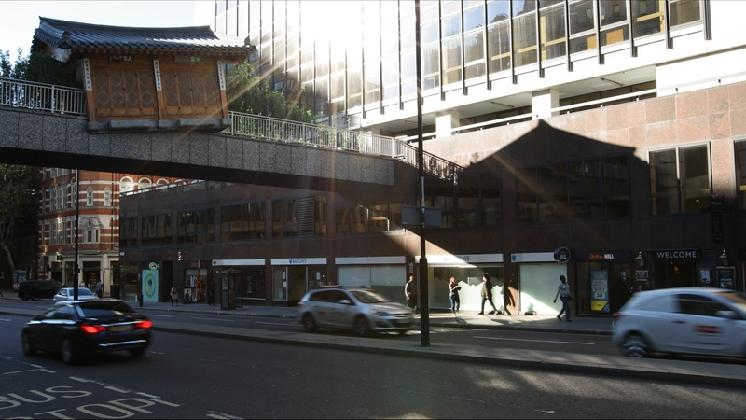
A traditional Korean house is being built in the heart of Liverpool. From a distance, it appears to be a house that doesn't belong in any particular city, and upon closer inspection, the viewer first notices the people and equipment that were moved to the site to construct it. MMCA Seoul's exhibition, "Do Ho Suh's Sites," explores both the final form of the artwork and the events that took place on-site during its creation. By selecting two of the 13 records that document the relocation of the house, one can view the same artist's work from different locations. 〈Do Ho Suh's Locations〉
 국립현대미술관 · 서도호
What holds up the house in Liverpool?
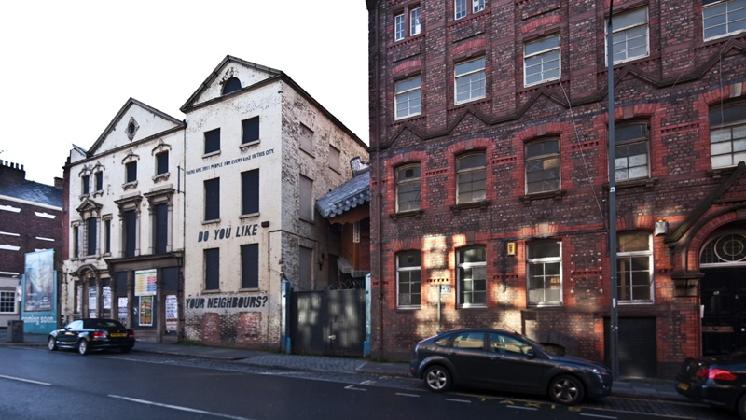
"Bridging Home, Liverpool" features a traditional Korean house that resembles the author's childhood home, as it is integrated into the urban landscape of Liverpool. While the exterior of the house aligns with the surrounding modern buildings, the specific angle and placement are also determined by the supporting structure and the worker's hand. When viewing the artwork, pay attention not only to the shape of the traditional Korean house's roof, but also to where it touches the buildings and which parts remain in the air. This allows you to understand why the artwork is only suitable for that particular location and how the single house appears in that environment.
The National Museum of Modern and Contemporary Art, Korea, discusses the Liverpool and London projects, highlighting the coordination process between artists, architects, and the institutions responsible for the sites. The phrase "placing a traditional Korean house in another country" refers to the unique way in which the structure is designed to withstand loads differently from conventional architecture, and to be positioned so that passersby can view the artwork. This record suggests that the location of public art is as important as the materials used.
You can see through the walls of a fabric house
 국립현대미술관 · 서도호
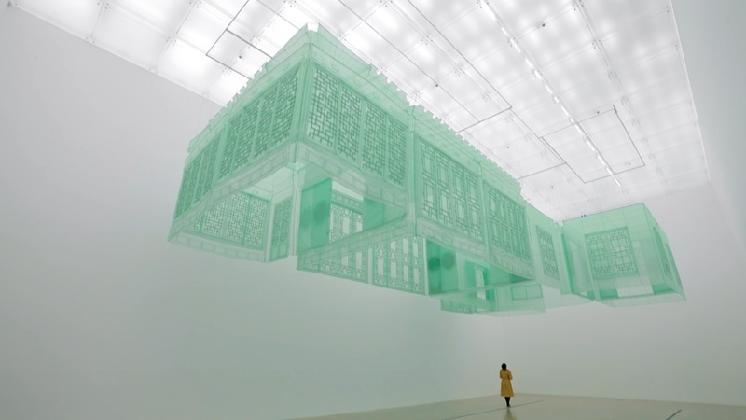
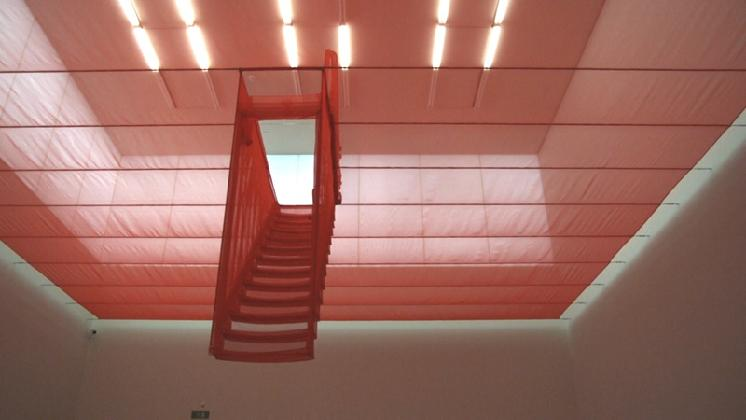
〈Do Ho Suh’s Moving Homes〉 features scenes where Do Ho Suh sets up translucent fabric structures, reminiscent of homes, at the Leeum Museum of Art, the 21st Century Museum of Contemporary Art, Kanazawa, and the National Museum of Modern and Contemporary Art, Korea. If traditional Korean houses in Liverpool are directly adjacent to buildings in the city, these fabric structures reveal glimpses of other spaces through small doorways and the outlines of walls. When you look from the floor to the wall, or from the wall to the door, you can still recognize the familiar form of the house, even in fabric.
 국립현대미술관 · 서도호
If you'd like to see more examples of this technique, be sure to check out the "Staircase" project. This project uses red fabric to recreate the actual shape of a staircase, allowing you to see the surface of the fabric and the space between the steps from the outside. By comparing how the person's body appears when looking at the doorway inside the fabric and when looking at the staircase from below, you can gain a better understanding of the technique.
If you can’t see both films on the same day, choose the material you want to follow. Start with a hanok installation if you’re curious about structure, or look for Do Ho Suh’s Moving Homes if you want to see how fabric carries the shape of a space. The official program has a date-by-date timetable. The ‘Walking with a Hanok’ discussion follows the December 11 screening, and the ‘Do Ho Suh’s Moving Homes’ discussion follows the December 16 screening. Both talks are in Korean and require a reservation for the associated screening. Official Screening Information
- Venue: MMCA Film and Video theater, basement level B1, MMCA Seoul.
- Address: 30 Samcheong-ro, Jongno-gu, Seoul.
- Dates: November 11–January 10.
- Admission is free.
- Information on ticket types and advance bookings for MMCA screenings MMCA Exhibition Information
As you watch the process of moving a house, you'll eventually see people who were passing by in front of the house appear on the screen. In the next house, you'll also get to see the person who built the house for you again, along with the shape of the walls.
Sources
- Photography
- 국립현대미술관 · 고티에 드블롱드 · 국립현대미술관 · 서도호 · 서도호 · 국립현대미술관 제공
- Sources
- mmca.go.kr
Related stories
Latest stories



The editor
Daily Korea Editorial
Korea through fashion, places, food and everyday culture.
More from this editor
Recommended stories