Why is this tiger looking at a magpie? A tiny guide to a big Korean motif
Follow a funny-looking tiger from historical art into a more thoughtful museum visit and souvenir choice.
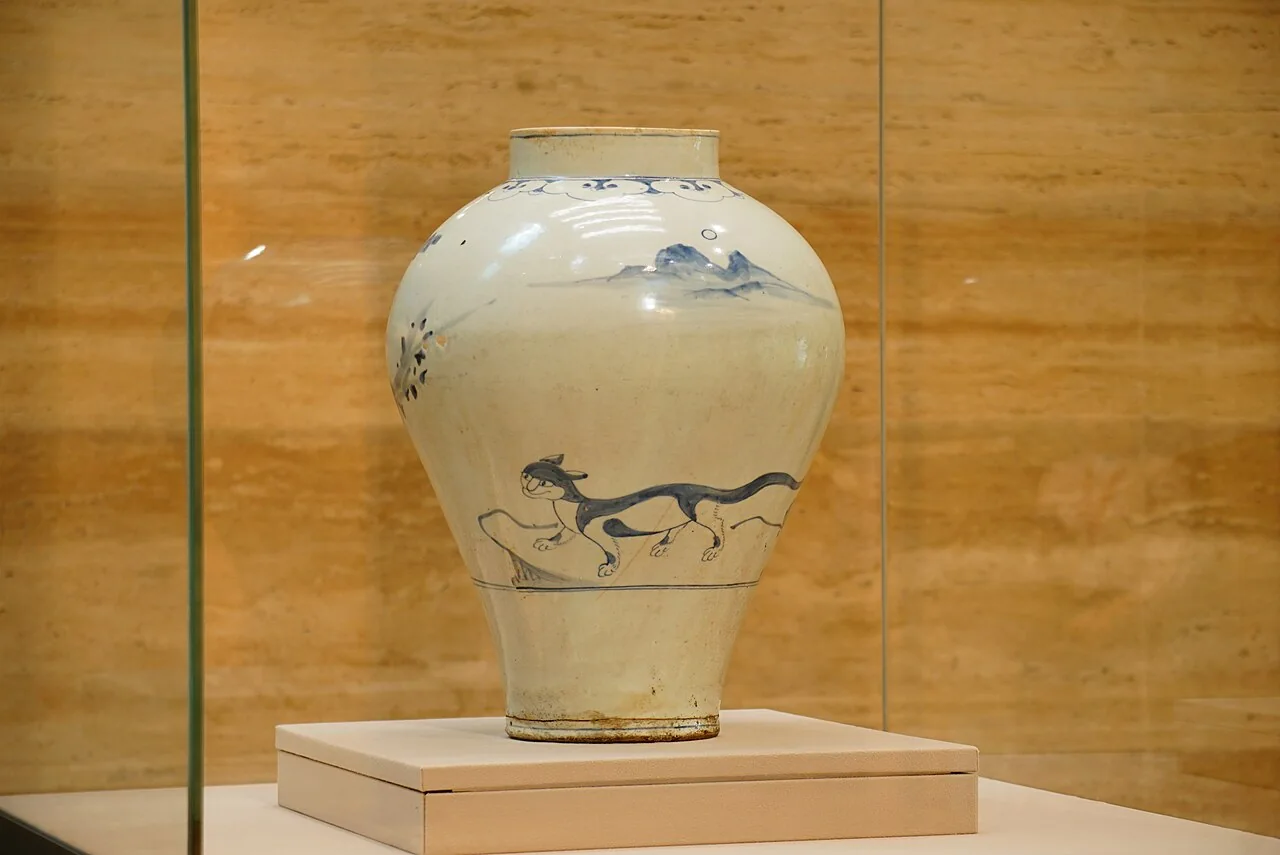
A tiger should be intimidating. In some Korean paintings, it looks distracted, awkward or almost ready to talk. Add a magpie to the scene and the image becomes a little conversation—one you can enjoy before you understand every symbol.
The National Museum of Korea's collection database includes a Joseon-period work titled Tiger and Magpies. Its presence in a historical collection is a useful reminder that the pairing did not begin with a recent animation, fashion graphic or social-media meme.
Good news, protection and a sense of humor
The Asian Art Museum's Korean painting label explains the association of tigers with warding off evil and magpies with good news. It also describes such paintings being placed at house gates for New Year's good fortune. These are historical interpretations and practices, not promises about what an image will do for its owner.
The same museum's Jakhodo Today exhibition text discusses a satirical reading: a foolish tiger standing for the elite and a magpie for ordinary people. Treat that as one documented interpretation rather than a universal code for every tiger image. The exhibition itself ran in 2023–2024 and is not a current Seoul event.
Try a three-detail looking game
Our suggestion is to look at the eyes first. Is the tiger staring at you, glancing up or looking toward the bird? Next, find the relationship between the animals: distance, direction and relative size. Finally, notice a third element, such as a tree or the empty space around them.
Those observations give you something specific to discuss. “This tiger's face made me smile” is a better beginning than announcing that every detail has a single hidden meaning.
Buy the story, as well as the shape
If you find the motif on a postcard, ceramic object or garment, read the maker's description. Ask whether it reproduces a named historical work or is a contemporary interpretation. Check the museum or artist credit rather than assuming any old-looking design is an official museum product.
When sharing a photograph, name the actual object and location if known. Similar motifs can appear on paintings and ceramics across different collections; they are not interchangeable evidence of the same work.
Sources
- Photography
- 掬茶 · Wikimedia Commons
Related stories
Latest stories
The editor
Daily Korea Editorial
Korea through fashion, places, food and everyday culture.
More from this editor
Recommended stories